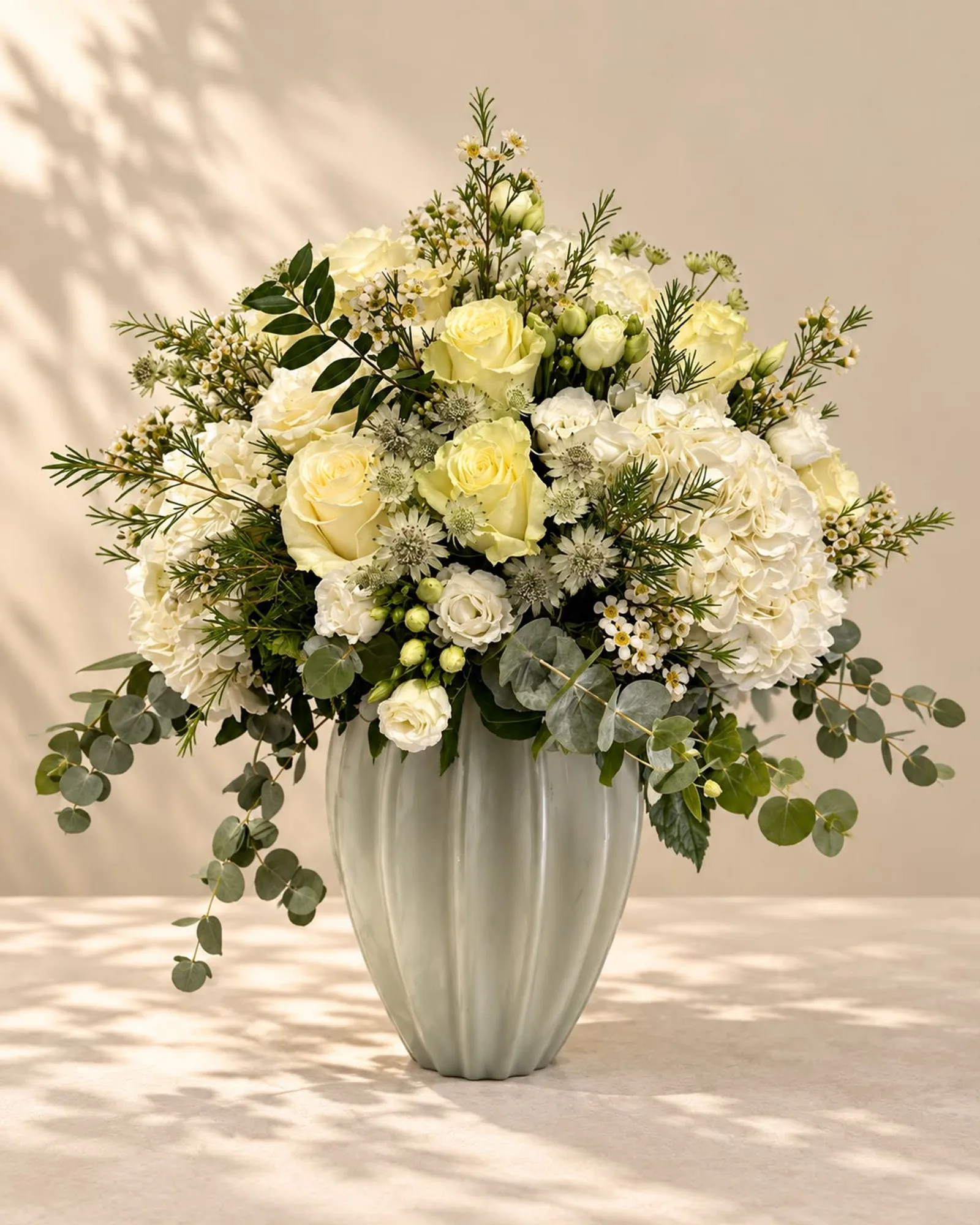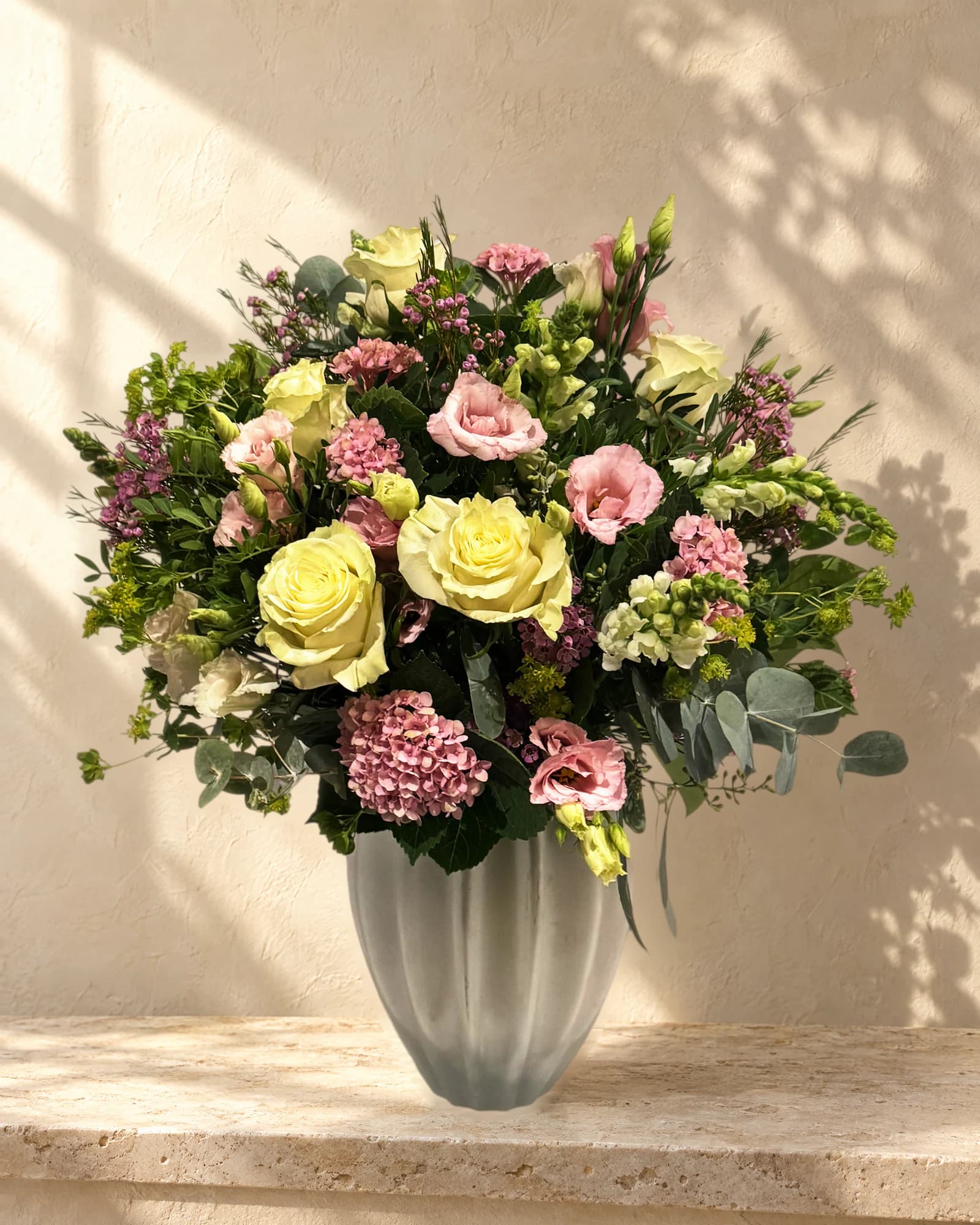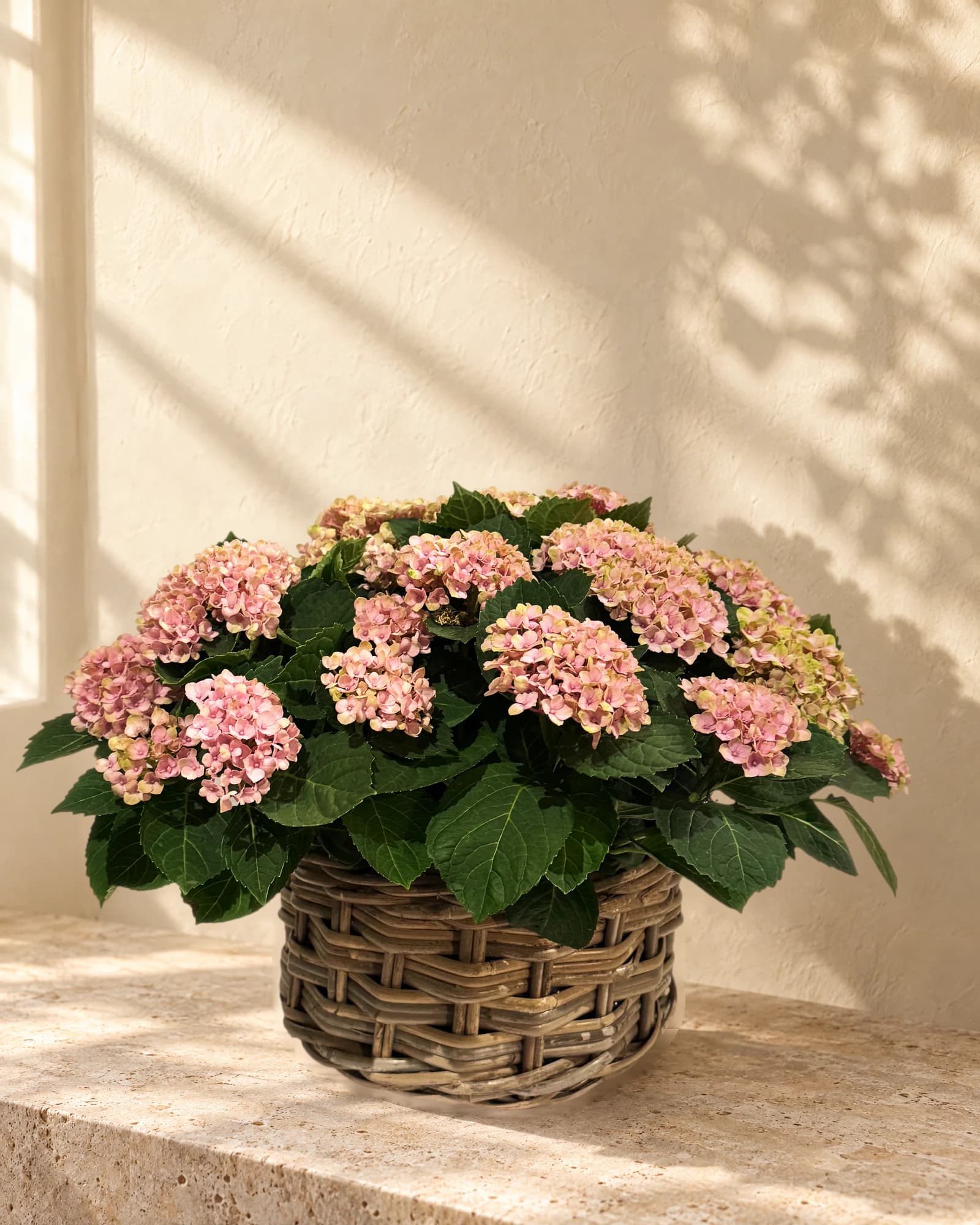
Pink
from £55
It is Halloween at the studio, and the Jack-O-Flowers are carved.Ends in 12 daysSee them
Blighs Meadow, SevenoaksMonday – Saturday, 9:00 – 17:00
Hydrangea
“heartfelt gratitude”
A hydrangea means heartfelt gratitude and being understood. The reading is often traced to a Japanese legend of an emperor who gave hydrangeas in apology to a family he had neglected.
The hydrangea's accepted meaning is heartfelt gratitude and being understood, a reading often traced to a Japanese legend of an emperor who gave hydrangeas in apology to a family he had neglected. The Victorians, less charitably, sometimes accused its huge scentless heads of boastfulness, but it is the kinder meaning that has endured. Its name comes from the Greek for 'water vessel', a clue that these generous blooms drink deeply and reward a well-topped-up vase.
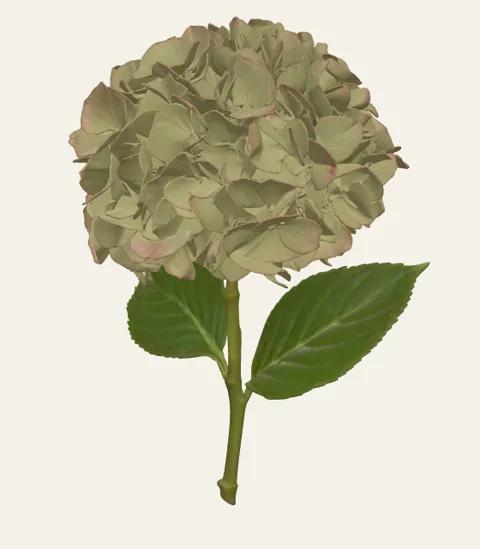
The studio buys hydrangeas in antique green, dusky blue and vintage pink, and at the bench each colour is read for its own meaning, a shade of the whole: heartfelt gratitude.
Hydrangeas are in season July to October, so they are in the studio this month.
In the studio's bunches it is a focal flower: the one a bunch is built around, with the others chosen to frame it.
Hydrangeas carry gratitude, elegance and peace, and the studio's guide to occasions lists them for thank you, new home, weddings and sympathy. Each of those pages shows the other stems that say the same thing, and the bunches made for the day.
The studio's guide to the meaning of flowers files every stem by what it says. These say the same as hydrangeas, so a bunch can carry the message in another season or another colour:
Pairings follow the florist's rule: one voice leads and the others frame it, so a bunch has a focal flower, a secondary one, texture and green. Hydrangeas are a focal flower, and in the studio's pairings they sit with these, each with a meaning of its own:
The name hydrangea comes from the Greek for 'water vessel', a clue that these generous blooms drink deeply: keep the vase well topped up.
The studio's care card for a hand-tied bunch says: Your bunch is tied so it stands on its own. The string is part of the arrangement, so leave it on. Cut a couple of centimetres off every stem at an angle with sharp scissors. A fresh cut drinks; a dry one seals over. Stand them in a clean vase of fresh, cool water with the flower food we sent. Top it up daily and change it every two or three days. Strip any leaves that would sit below the waterline, because leaves in water go slimy and spoil the water. Keep them out of direct sun and away from radiators, and never next to the fruit bowl: ripening fruit gives off a gas that ages flowers. A cool room overnight does them good. If the house is warm, a north-facing windowsill or a hallway is kinder than the kitchen. Take out anything that goes over before the rest. One tired stem makes the whole bunch look tired, and it hurries the others along. Every flower keeps its own pace: tulips go on growing in the vase, lilies open a bud at a time, and the softest stems are over first. How long they go on depends on the stems and the room they are in.
The studio’s bunches that name this stem, arranged to order in Sevenoaks and delivered by the van.
Pairings follow the florist's rule: one voice leads and the others frame it (focal, secondary, texture, green).